
Ideological Inspiration
Sri Guru Gobind Singh Ji — Khalsa, Equality, Courage and Moral Leadership
Sri Guru Gobind Singh Ji, the Tenth Sikh Guru, joined spiritual wisdom, learning and fearless service with an unwavering commitment to equality and justice. The creation of the Khalsa gave visible form to dignity, discipline, shared responsibility and resistance to oppression.
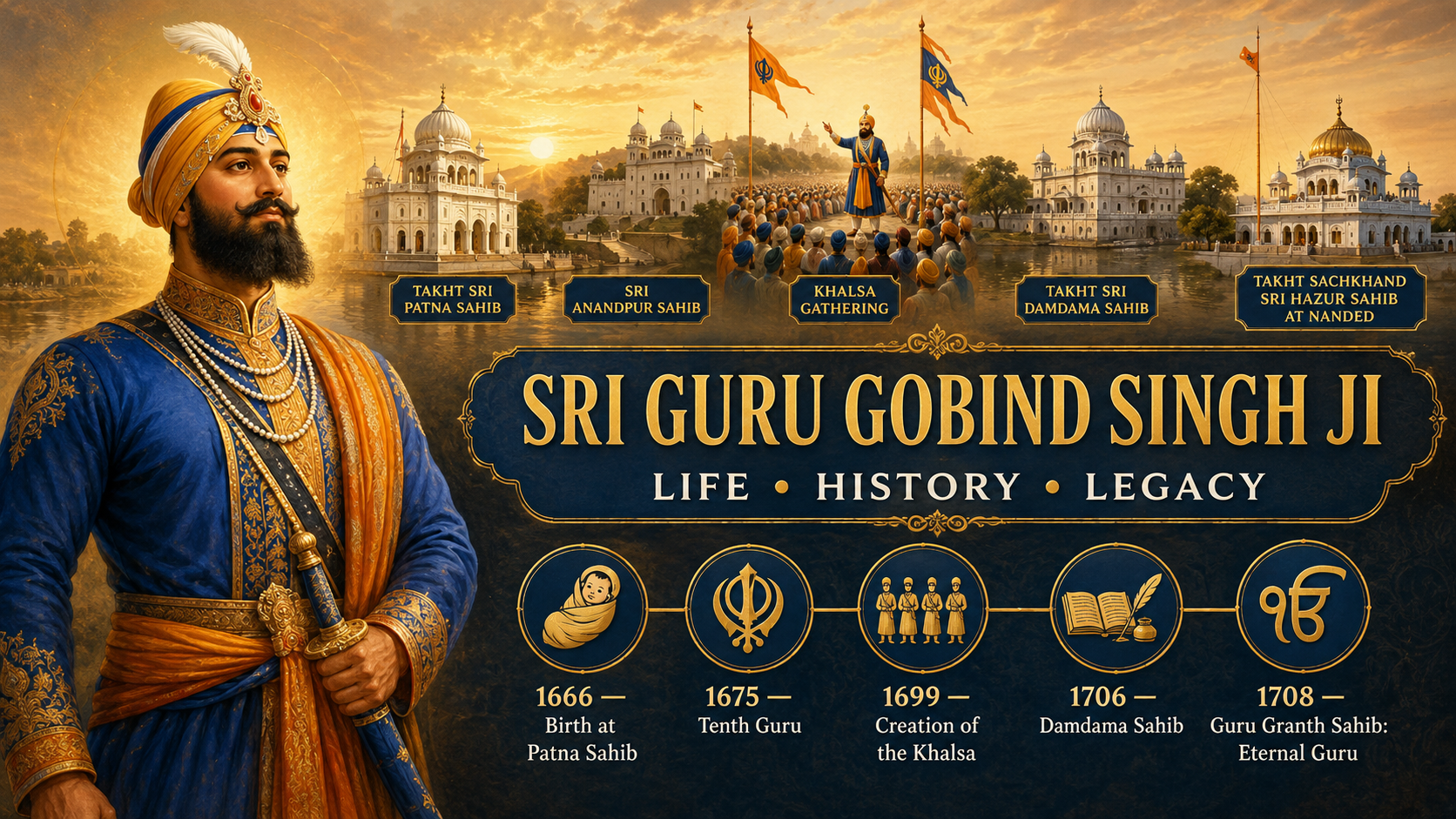
Life, History and Enduring Legacy
This 90-second visual journey highlights Patna Sahib, the Guruship, the creation of the Khalsa at Anandpur Sahib, Damdama Sahib, and the investiture of Sri Guru Granth Sahib Ji as the eternal Guru in 1708.
Life, Principles and Institutions
22 December 1666 — Patna Sahib
Birth, Early Life and Learning
Born at Patna Sahib on 22 December 1666, Sri Guru Gobind Singh Ji grew up in an environment of learning, languages, devotion and faith that shaped a lifetime of principled leadership.
11 November 1675 — Tenth Guru
Freedom of Conscience
Assuming the Guruship on 11 November 1675 after the martyrdom of Sri Guru Tegh Bahadur Ji, he carried forward the defence of freedom of conscience for people of every faith.
30 March 1699 — Creation of the Khalsa
Equality Beyond Caste
The Khalsa, created at Anandpur Sahib on 30 March 1699 with the Panj Piare, gave form to equality beyond caste, shared discipline, courage and service to humanity.
Shabad, Poetry and Learning
Spiritual and Literary Legacy
He encouraged learning, poetry and scholarship, and taught devotion to the One along with ethical conduct—showing that knowledge and character must grow together.
Courage with Restraint
Strength in Defence of Dignity
Strength was to be used only in the defence of justice and human dignity, never as aggression—courage always guided by restraint and moral purpose.
1706 — Damdama Sahib
Learning and the Scripture Recension
The time at Damdama Sahib in 1706 is remembered for learning and for the careful preparation of the recension of the Sikh scripture, undertaken with great care and reverence.
1708 — Nanded, Eternal Guruship
Authority of the Word
At Nanded in 1708, Sri Guru Granth Sahib Ji was declared the eternal Guru—placing enduring authority in the Word rather than in any individual.
Connection to Public Service
The Triangle Party of Punjab draws moral inspiration from these teachings for its commitment to equality without caste, courageous but restrained public conduct, freedom of conscience, learning and discipline, justice for the oppressed, and service placed before self-interest.
- Equality without caste
- Courage with restraint
- Freedom of conscience
- Learning and discipline
- Justice for the oppressed
- Service before self
Important notice
This page presents the party's respectful interpretation of historical teachings for public-service values. The supplied image is illustrative artwork, not an authenticated portrait or historical photograph. It does not claim religious endorsement.