Redevelop Villages • Protect Farmland
Connected Villages, Shared Services, Protected Agricultural Land
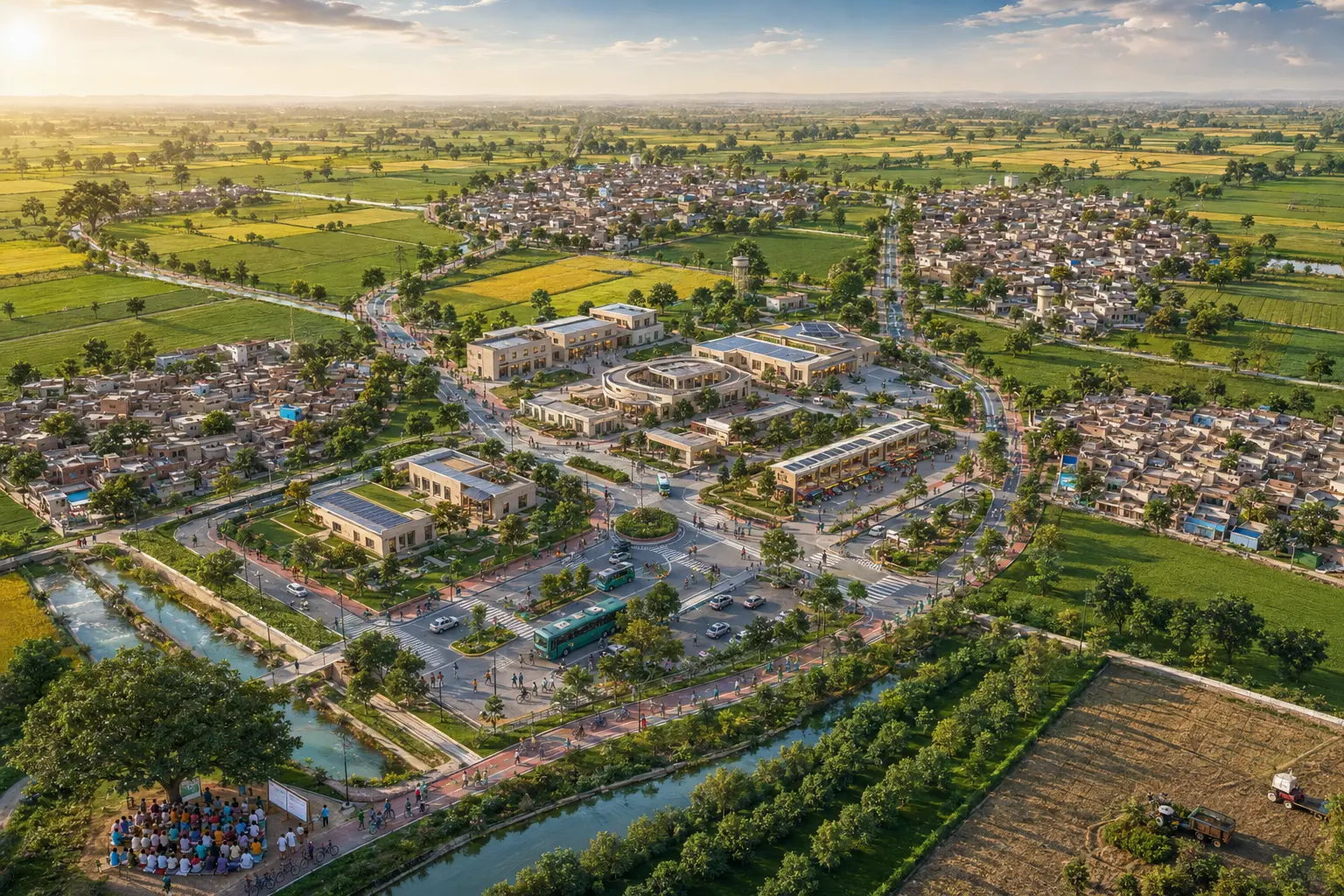
Create approximately 2,000 proposed Regional Village Service Hubs while preserving the identity, governance and land rights of Punjab’s existing villages.
Nearby villages would share modern Town Hall services, healthcare, education, skills, markets, transport, emergency facilities and digital administration without requiring every village to duplicate expensive infrastructure.
What This Proposal Actually Says
Punjab’s existing villages would retain their names, identity, land rights and local representation while approximately 2,000 proposed Regional Village Service Hubs provide shared higher-level services to groups of nearby villages.
Data noticeHistorical Census figure—not current live count.
Census of India 2011 recorded 12,581 total villages in Punjab, including 12,168 inhabited and 413 uninhabited villages. These are historical census figures and not a current live administrative count.
Source: Census of India 2011 (PDF)What Is a Regional Village Service Hub?
A Regional Village Service Hub is a compact shared-service centre designed to serve a group of nearby villages. It does not erase, rename or automatically merge those villages.
The number of villages served by each hub must be determined through
- Population
- Travel distance
- Road access
- Geography
- Flood risk
- Existing facilities
- Administrative boundaries
- Public consultation
- Accessibility
- Future population needs
Do not automatically assign the same number of villages to every hub.
One Accessible Service Campus for Nearby Villages
01
Regional Town Hall
A single accessible place for administration, hearings and records for all villages in the group.
- Citizen-service counters
- Public hearings
- Panchayat coordination
- Grievance tracking
- Government-scheme information
- Meeting rooms
- Public records access
02
Primary Healthcare and Diagnostics
Day-to-day treatment, maternal and child care, basic laboratory tests and medicine supply close to home.
03
School, Library and Skill Centre
Shared senior classes, science and computer labs, a public library and job-oriented skill training.
04
Farmer Service and Market Centre
Soil and input advice, storage, grading, weighing and a fair local selling point for nearby farms.
05
Women, Child, Senior and Disability Services
Anganwadi support, women’s help desk, senior day services and barrier-free access throughout the campus.
06
Emergency and Disaster Response
Ambulance stand, fire and flood response equipment, relief storage and a trained local response team.
07
Digital Citizen-Service Centre
Certificates, applications, pensions and scheme services online, with assisted help for those who need it.
08
Public Transport Terminal
A shared stop connecting every served village to the hub, the block town and the district centre.
09
Community Hall and Sports Facilities
Space for gatherings, cultural events, youth coaching and shared playing fields.
10
Cooperative and Small-Business Support
Registration help, shared workspace, credit guidance and market linkage for local enterprises.
Villages Must Retain Their Identity and Rights
Mandatory safeguards
- No forced village merger
- No forced relocation
- No automatic village renaming
- No compulsory transfer of private land
- No change to land title without lawful consent
- Existing Panchayat representation protected unless changed through lawful public process
- Village heritage and community places respected
- Written public consultation
- Independent land-rights review
- Appeal and grievance process
- Compensation and rehabilitation only where lawful acquisition is unavoidable
- Special protection for vulnerable landowners, tenants and common lands
Nothing in this proposal implies that government may take agricultural land merely by designating a service hub.
Redevelopment Without Consuming Fertile Land
Redevelop Existing Built-Up Areas First
Improve and reuse land already inside the village abadi before considering any new land.
Use Vacant or Underused Public Land Where Lawful
Where law allows, place shared facilities on vacant or underused government land instead of farmland.
Establish Agricultural Protection Zones
Mark high-productivity farmland where non-agricultural construction is restricted by published rules.
Prevent Unplanned Ribbon Development
Stop continuous unplanned building along highways that slowly eats fields and blocks access.
Protect Canals, Ponds and Drainage Routes
Keep water bodies and natural drainage lines free of encroachment so monsoon flow stays safe.
Encourage Compact Mixed-Use Development
Place homes, shops and services close together to reduce land use, travel and servicing cost.
Maintain Green Belts Between Settlements
Keep farmland and tree cover between settlements instead of allowing them to merge into sprawl.
Map Every Land-Use Change Publicly
Publish every proposed and approved change of land use on accessible public maps.
Agricultural land cannot be completely protected without land-use enforcement, legal safeguards and local participation.
Village Redevelopment Package
Each participating village may receive a locally approved plan covering:
- Direct treated tap water
- Underground sewerage
- Separate stormwater drainage
- Underground electricity where feasible
- Solid-waste collection
- Paved accessible streets
- Street lighting
- Footpaths and cycling links
- Parks and tree cover
- Internet and telecom ducts
- Public-transport connections
- School and health access
- Heritage protection
- Emergency routes
- Agricultural access roads
Reach Shared Services Without Leaving the Village
- Electric or low-emission buses
- Published village routes
- Affordable fares
- School transport
- Accessible vehicles
- Emergency transport
- Cycling routes where safe
- Covered stops
- Evening service planning
- Digital and offline timetables
Residents must not be forced to own a private vehicle to access essential services.
Site-Selection Criteria
- Population served
- Maximum travel time
- Existing road network
- Land ownership
- Agricultural productivity
- Flood and drainage risk
- Groundwater
- Existing schools and healthcare
- Utility capacity
- Environmental impact
- Capital and operating costs
- Public acceptance
- Accessibility
- Future maintenance capacity
Publish the scoring criteria and selected-site reasons.
Implementation Phases
- 01
Verify the current official village and Panchayat directory.
- 02
Map population, services, agricultural land, roads, water and environmental risks.
- 03
Conduct village-by-village consultation.
- 04
Select a small number of pilot regional hubs through published criteria.
- 05
Prepare legal, social, environmental and financial assessments.
- 06
Build shared services and transport before considering administrative changes.
- 07
Independently evaluate access, farmland impact, service quality and cost.
- 08
Expand only after public review and approved budgets.
No fixed deadlines or costs will be published without approved detailed project reports.
Every Village Must Have a Voice
- Village consultation calendar
- Public maps
- Proposal documents
- Objection and suggestion form
- Women’s consultation
- Farmer consultation
- Tenant and labourer consultation
- Disability-access review
- Youth and senior participation
- Written response to major objections
- Independent hearing process
Public Dashboard
Each proposed hub would publish, without any private landowner or household information:
- Proposed hub location
- Villages proposed to be served
- Population served
- Average travel distance
- Existing services
- Proposed services
- Land required
- Agricultural land affected
- Consultation status
- Project stage
- Approved budget
- Contractor information
- Progress
- Complaints
- Independent audit
- Last verified date
Policy notice
This proposal concerns shared regional services and planned redevelopment. It does not authorize forced village mergers, relocation, land transfer or cancellation of local identity. Any administrative or land-use change would require applicable law, public consultation, consent safeguards, approved budgets and independent review.